By Clixtell Content Team | June 28, 2026
Estimated reading time: 7 minutes
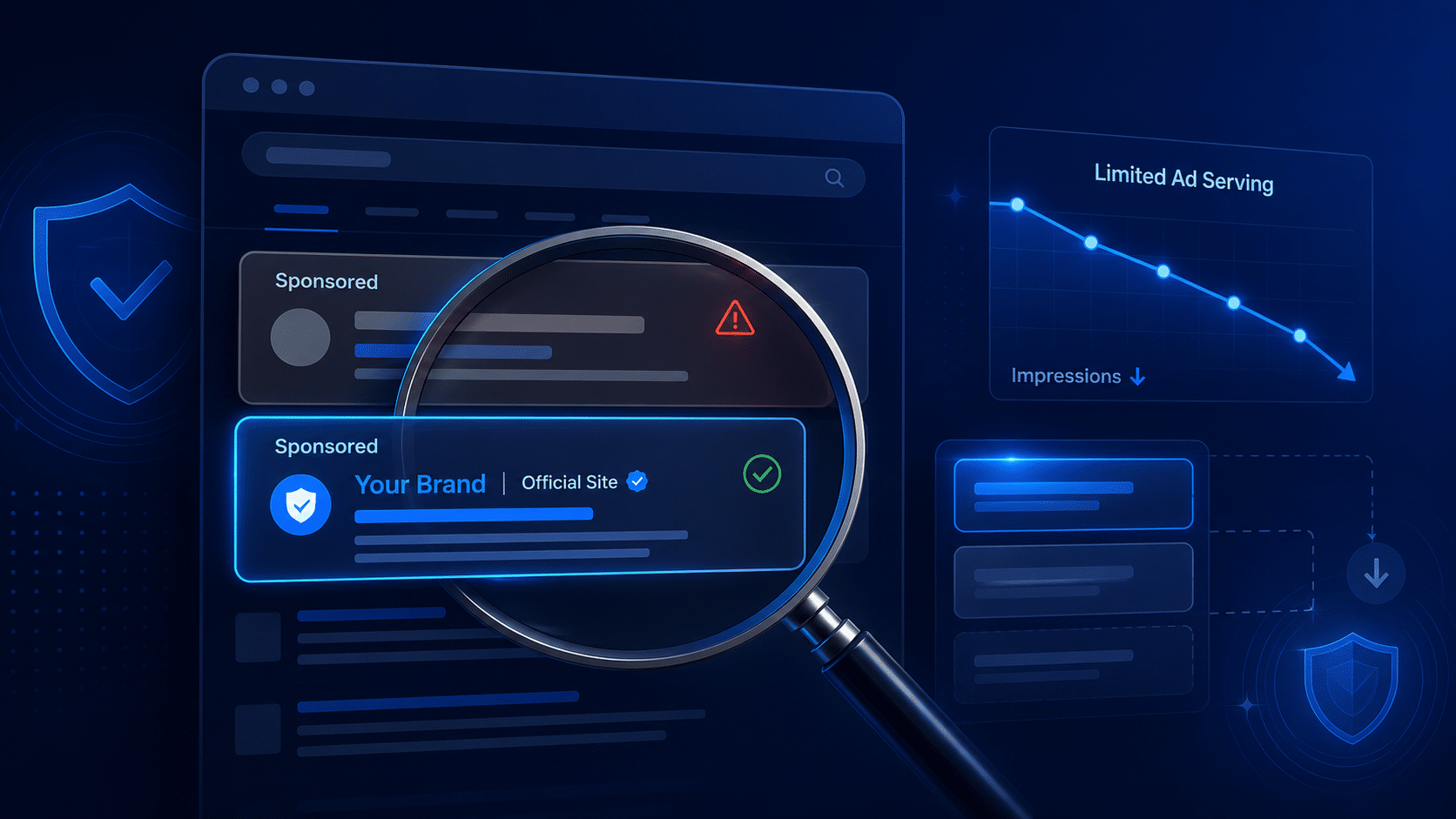
Google Ads Limited Ad Serving: How Brand Clarity Affects Search Impressions
Google Ads has always depended on trust. Advertisers pay to appear in front of people with intent, and users expect the ad they click to lead them to a clear, honest, and relevant experience. When that trust breaks, the issue is bigger than one weak ad. It affects search quality, advertiser confidence, and the way users interpret paid results.
That is the context behind Google’s expanded Google Ads Limited ad serving policy. In June 2026, Google announced that Limited Ad Serving would cover additional scenarios on Google Search, with implementation beginning gradually and continuing through 2028.
The practical message for advertisers is simple: Google wants users to understand who they are dealing with before they click. That makes brand clarity a performance issue, not just a policy detail.
What Google Ads Limited Ad Serving Means
Limited Ad Serving is not the same as a standard ad rejection, account suspension, or policy disapproval. In many cases, an ad may still be technically eligible to run, but Google may reduce how often it appears in certain search scenarios.
That distinction matters. An advertiser may open Google Ads, see that the ad is approved, and still experience limited delivery. The issue is not always visible as a simple red warning inside the account. Sometimes the problem is reflected in reduced impressions, weaker reach, or inconsistent serving on specific types of searches.
Google says the policy is designed to limit ads that have a higher potential to create poor experiences. On Search, this becomes especially important when the identity of the advertiser is unclear, when the ad references another brand, or when the message is too generic for users to understand who is actually behind the offer.
Why Google Is Paying More Attention to Brand Clarity
Search is different from many other ad channels because users often arrive with a specific intention. They may be looking for a company, a login page, a support number, a refund policy, a pricing page, or a product they already know.
When someone searches for a brand name, they are not always comparing options. Sometimes they are trying to reach one exact company. If another advertiser appears above the organic result with similar wording, unclear branding, or vague messaging, the user may assume the ad belongs to the brand they searched for.
This can happen even when the advertiser does not intend to mislead anyone. A third-party consultant may offer a real service. A comparison website may provide useful information. A reseller may be allowed to promote a product. But if the ad and landing page do not explain the relationship clearly, the user experience can still feel confusing.
The issue is not only what the advertiser meant. It is what the user understood.
Why Branded Searches Are Becoming More Sensitive
Imagine a user searches for “InvoicePilot login”.
InvoicePilot is a fictional SaaS invoicing platform. The user is not browsing the market or comparing billing tools. They are trying to access a specific account they already use.
Now imagine the first ad they see is not from InvoicePilot. It is from an independent software consulting company called BillingBridge. The ad headline says:
InvoicePilot Login Help
The description says:
Access your billing dashboard faster. Get help with invoices, subscriptions, and account access.
When the user clicks, the landing page opens with a large headline:
InvoicePilot Account Assistance
Only near the footer does the page explain that BillingBridge is an independent provider and is not affiliated with InvoicePilot.
The problem is not that BillingBridge is automatically fake. The problem is interpretation. A user who searched for a login page may believe they are interacting with the official software provider. That is especially sensitive because searches containing words like login, billing, refund, support, and account access carry high trust. The user may be ready to enter personal details, payment information, or account credentials.
In this type of search, brand clarity must happen before the click, not after the user scrolls to the bottom of the landing page.
A clearer version of the ad would lead with the independent brand:
BillingBridge: Independent InvoicePilot Setup Help
The landing page should repeat the same relationship clearly above the fold:
BillingBridge provides independent setup and account assistance. We are not InvoicePilot.
That may reduce clicks from users who only wanted the official login page, but it improves trust. It also helps the advertiser avoid paying for people who misunderstood the offer.
How Generic Ads Can Create Trust Problems
Brand confusion is not limited to ads that mention another company. Generic ads can create a similar problem.
Headlines like “Official Support Center”, “Trusted Billing Help”, “Account Access Portal”, or “Best Software Provider” may sound persuasive, but they can also hide the identity of the advertiser. If the user cannot quickly understand which company is behind the ad, the experience becomes weaker.
This is especially risky for newer advertisers and lesser-known brands. A large company may be recognized immediately. A smaller advertiser does not have that advantage. If its ad copy is too generic, users and automated systems have less context for understanding whether the ad is trustworthy.
Clear branding is not only a design decision. It is part of search quality.
How Unclear Ads Can Hurt Performance Beyond Policy
Even if an unclear ad never triggers limited serving, it can still damage performance.
When users click because they misunderstood the offer, the advertiser pays for traffic that was never likely to convert. Some users leave immediately. Others submit low-quality forms. Some contact the business only to realize it is not the company they expected. Over time, this creates a messy performance picture: clicks look real, conversion volume may look stable, but sales quality declines.
This is why advertisers should look beyond surface metrics. A campaign can show clicks, conversions, and a reasonable cost per lead while still sending the wrong people into the funnel. If poor-fit users are counted as leads, it becomes harder to separate real demand from noise. That is why reviewing spam leads from Google Ads is important for advertisers that rely on forms, calls, and CRM data.
Brand clarity helps prevent the problem earlier. It filters expectations before the click happens.
How Advertisers Can Reduce the Risk
The first step is to make the advertiser identity visible in the ad itself. The brand name should not appear only in the display URL or in small text at the bottom of the landing page. It should be clear in the headline, description, and opening section of the page.
The second step is to explain any third-party relationship directly. If the advertiser is independent, a reseller, a comparison site, a consultant, or an integration partner, that relationship should be easy to understand. Avoid wording that makes users think the advertiser is the official brand when it is not.
The third step is to avoid overly broad copy. Specific language is usually safer and better for performance. Instead of writing “Official Account Help”, explain what the company actually does. Instead of “Best Provider Near You”, describe the service, location, or business type. Instead of building the entire page around another brand, make your own brand and value clear.
Advertisers should also review search terms that create mismatch. Queries containing words like login, support, refund, phone number, account, billing, or cancel may carry different intent than standard commercial searches. In some accounts, those terms are valuable. In others, they attract users who were looking for something else entirely.
A structured negative keywords audit can help separate useful search intent from terms that repeatedly produce poor-fit traffic.
| Risk signal | Why it matters | Better approach |
|---|---|---|
| Ad copy mentions another brand but hides the advertiser’s own brand | Users may think they are clicking the official brand | Lead with the advertiser’s brand and explain the relationship clearly |
| Landing page uses terms like “official,” “support,” or “account help” without clear identity | Users may misunderstand who they are contacting | State the company name and role above the fold |
| Search terms include login, billing, refund, or account access | These queries often carry high-trust intent | Review whether those terms belong in the campaign or should be excluded |
| Conversions look stable but sales quality drops | The campaign may be attracting users with mismatched expectations | Compare ad intent, landing page behavior, and CRM outcomes |
Why Limited Ad Serving Is Also a Trust Issue
It is easy to treat Limited Ad Serving as a compliance topic. But the deeper issue is trust.
A user should quickly understand three things:
- Who is advertising?
- What is being offered?
- What is the advertiser’s relationship to the brand, product, or service mentioned in the search?
If those answers are unclear, the campaign has a trust problem before the landing page even has a chance to convert.
Paid search performance depends on more than bids and keywords. It depends on whether the right user clicks for the right reason. When ad copy creates confusion, performance data becomes harder to trust. When landing pages hide the advertiser’s identity, users become less confident. When the wrong intent enters the funnel, sales teams waste time and automated systems may optimize toward weak signals.
The practical lesson is simple: do not make users guess who you are. Tell them immediately.
Clear branding may reduce accidental clicks, but that is usually a good thing. The goal is not to win every impression or every click. The goal is to win the right clicks from users who understand exactly where they are going.
As Google expands Limited Ad Serving on Search, advertisers should treat brand clarity as part of campaign quality. Clean messaging, transparent landing pages, clear commercial relationships, and better traffic review all support the same goal: fewer confused users and stronger paid search performance.
For teams that want to go deeper, a broader Google Ads traffic quality audit can help connect search intent, landing page behavior, lead quality, and campaign outcomes into one clearer picture.
FAQ
What is Google Ads Limited Ad Serving?
Google Ads Limited Ad Serving is a policy framework where Google may limit impressions from advertisers in specific scenarios that have a higher potential to create poor or confusing user experiences. It is not the same as a standard ad disapproval or account suspension.
Can approved ads still receive limited impressions?
Yes. In some cases, ads may be technically approved but still receive fewer impressions in certain search scenarios if Google determines that the advertiser is not qualified for that context or that the ad experience may confuse users.
Why does brand clarity matter for Google Search ads?
Brand clarity matters because users often search with a specific brand, login page, support request, billing question, or account-related intent in mind. If the ad does not clearly show who the advertiser is, users may think they are engaging with a different company.
Are ads allowed to mention another brand?
Mentioning another brand is not automatically a problem, but the advertiser’s own identity and relationship to that brand must be clear. Ads and landing pages should avoid implying an official relationship when the advertiser is actually independent.
How can advertisers reduce the risk of limited ad serving?
Advertisers can reduce risk by clearly displaying their own brand in ads and landing pages, avoiding generic ad copy, explaining third-party relationships, reviewing sensitive branded search terms, and keeping ad messaging consistent with the landing page experience.