Michael Green | October 26, 2025
Smart Bidding vs Manual CPC: Which Gives You Real Control
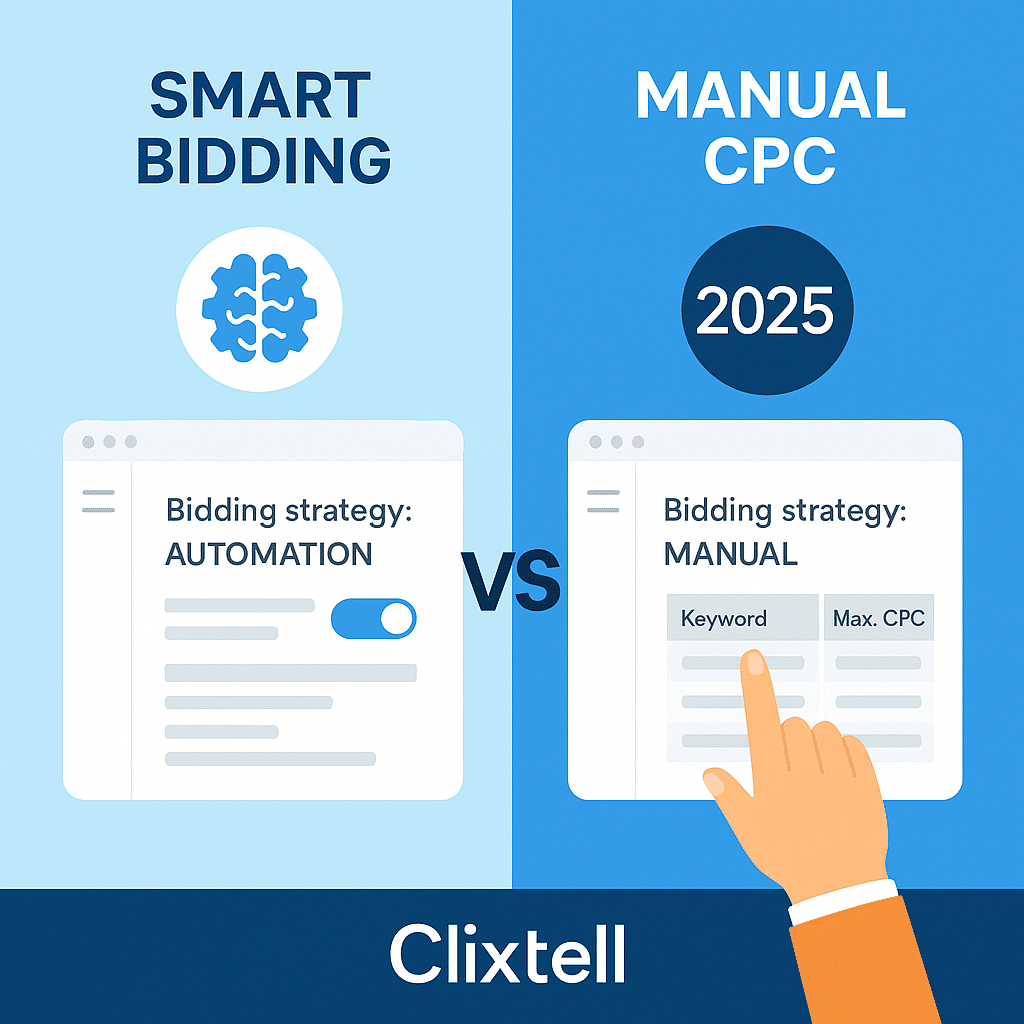
Google Ads relies on automation more each year. Smart Bidding, Performance Max, and AI driven targeting now control most campaigns. But every serious advertiser still asks the same question. Does automation truly perform better than manual control or does it reduce visibility over spend and results? This guide compares Smart Bidding and Manual CPC, shows when each works best, and explains why verified data gives you real control.
What Is Smart Bidding?
Smart Bidding uses Google machine learning to adjust bids for every auction. It reads signals such as device, location, time, and intent to estimate the right price for each click. Strategies include Target CPA, Target ROAS, Maximize Conversions, and Maximize Conversion Value. It makes thousands of decisions per day, each tuned to your goals, but the logic behind those decisions remains hidden. You see the results but not the reasoning.
For details see the Smart Bidding Help Center.
What Is Manual CPC?
Manual CPC gives you full control over bids at the keyword or ad group level. You decide how much to pay per click and can adjust by device, region, or schedule. It is slower but transparent. Every change has a visible reason. This method is ideal for testing new markets, limited budgets, or when accountability is essential.
Smart Bidding: What Changed
In 2025 Smart Bidding evolved further. Google now shares learning across Search, Performance Max, Display, and YouTube. It adjusts bids in real time while following privacy rules across regions. Large accounts benefit the most. The weakness is still the same. It depends on perfect tracking and clear conversion data. If that data is flawed, automation will optimize for the wrong audience.
The Control Problem
Smart Bidding reduces manual work but hides decision logic. When conversions drop or costs rise, it is hard to know why. Manual CPC requires more attention but gives you full visibility. You know what changed, why it changed, and what it cost. Control means understanding every action, not just watching results.
For more help with performance analysis, see Why Your Google Ads Are Not Converting in 2025.
Data Accuracy: The Real Decider
Both systems rely on accurate data. If fake clicks, bots, or VPN users reach your campaigns, Smart Bidding counts them as valid interactions. It then spends more on low quality traffic. Manual CPC also suffers if reporting is polluted. Clixtell solves this problem. It validates every click, blocks fraud instantly, and records sessions so you can see the truth. Verified data gives Smart Bidding better inputs and makes Manual CPC decisions reliable.
When Smart Bidding Works Best
- You generate at least 30 real conversions per month.
- Your traffic is validated by a fraud protection system.
- Your conversion goals reflect real business value.
When Manual CPC Still Wins
- You manage small or new accounts without enough data.
- You want predictable spend and immediate control.
- You run short promotions or local campaigns.
- You prefer transparency for reporting and client trust.
The Hybrid Model
- Start with Manual CPC to build clean, verified data.
- Use Clixtell to remove invalid traffic and confirm genuine leads.
- Switch to Smart Bidding after achieving consistent results.
- Keep a manual campaign as a control group for comparison.
Cost and Risk Comparison
Setup Time: Smart Bidding is fast. Manual CPC takes longer.
Transparency: Smart Bidding is low. Manual CPC gives full visibility.
Data Dependence: Smart Bidding depends on clean data. Manual CPC is moderate.
Learning Period: Smart Bidding needs time to learn. Manual CPC reacts instantly.
Works With Low Volume: Smart Bidding struggles. Manual CPC fits perfectly.
Overspend Risk Without Validation: Smart Bidding has higher risk. Manual CPC remains moderate.
Best Use: Smart Bidding suits large stable campaigns. Manual CPC fits smaller tests and limited budgets.
Measurement Checklist
- Track verified conversions tied to revenue.
- Ensure templates and conversion tags are installed correctly.
- Exclude invalid IPs, VPNs, and repeated devices.
- Use session recordings to confirm real visitor behavior.
- Review data weekly and adjust based on verified inputs.
How Session Recordings Help
Session recordings reveal what happens after each click. Do users scroll, interact, or bounce in 5 seconds. That insight proves which traffic is real and helps refine ads, bids, and landing pages for both automation and manual control.
How Agencies Should Present Control
Clients fear waste and also fear losing control. The best approach is transparency. Show reports, session proof, and blocked fraud data. Explain which campaigns use Smart Bidding and which remain manual. Clixtell data gives agencies verifiable proof of secure and efficient management.
Common Mistakes To Avoid
- Activating automation before collecting 30 verified conversions.
- Using soft goals like page views instead of true leads or sales.
- Ignoring data spikes from suspicious activity.
- Allowing remarketing lists to include fake users.
- Skipping search term and negative keyword reviews.
How Clixtell Strengthens Any Strategy?
Clixtell protects both automation and manual control. It blocks fake clicks, confirms real users, and records each visit for proof. Whether you use Smart Bidding or Manual CPC, data accuracy remains the real advantage. Clixtell ensures every click and conversion come from genuine customers.
Our Take
Smart Bidding offers automation and speed. Manual CPC gives transparency and control. Real success in 2025 comes from using both powered by accurate data. Clixtell provides that verification, connecting automation with accountability for better ROI and safer ad spend.
Frequently Asked Questions
What is the main difference between Smart Bidding and Manual CPC?
Smart Bidding uses AI to adjust bids automatically in each auction. Manual CPC allows advertisers to set bids manually for full control and visibility.
Does Smart Bidding always outperform Manual CPC?
No. Smart Bidding works best with verified data and at least 30 conversions per month. In low data cases, Manual CPC tends to be more stable.
How can I prevent Smart Bidding from optimizing around fake clicks?
Use real time click validation with Clixtell. It filters bots, proxies, and repeated devices before they reach Google Ads, ensuring Smart Bidding learns only from genuine visitors.
Can I use Smart Bidding and Manual CPC together?
Yes. Many advertisers run a hybrid model Manual CPC for testing and Smart Bidding for scaling to balance flexibility and automation.
What is the biggest risk of Smart Bidding?
Relying on inaccurate or fraudulent data. Without validation, the algorithm can waste budget on low quality or fake traffic.
How do I know if Smart Bidding is working correctly?
Compare verified conversions against a manual control campaign. Use session recordings to confirm real human engagement and conversion accuracy.